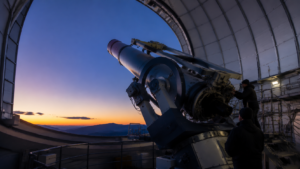
New Telescope Surveys Are Changing How Astronomers Map the Sky

New telescope surveys are transforming astronomy by repeatedly photographing enormous areas of the sky. Instead of observing one target for a single project, these programs create shared maps containing millions of stars, galaxies, and changing events. Researchers can ask questions that were impossible with smaller, isolated collections.
A survey telescope combines a wide field of view with sensitive cameras and precise scheduling. It returns to the same region on regular nights, revealing objects that brighten, move, or disappear. The repeated pattern helps identify supernovae, asteroids, variable stars, and distant activity around black holes.
Each observing night produces a vast stream of images. Automated pipelines correct instrumental effects, compare new exposures with reference maps, and issue alerts when something changes. Astronomers then prioritize follow-up observations with other telescopes, balancing scientific interest with limited time.
Large surveys are international collaborations involving engineers, software developers, statisticians, and educators as well as astronomers. Public data releases allow researchers without their own observatory to participate. Students can explore professional measurements, while citizen-science projects help classify unusual shapes or light patterns.
Machine learning is useful for filtering candidates, but human review remains important. Algorithms can mistake camera artifacts, satellites, or weather effects for discoveries. Calibration systems track tiny changes in focus and atmosphere, and detailed metadata lets scientists judge whether a signal is trustworthy.
Data volume creates long-term responsibilities. Archives need reliable funding, transparent software, cybersecurity, and formats that remain accessible. Bright satellite trails can interfere with images, and observatories must reduce local light pollution. Collaboration with nearby communities is also essential for protecting dark skies.
The greatest value of a sky survey may emerge years after observations are collected. Future researchers can search the archive for objects not yet recognized as important. By creating a consistent record of a changing universe, surveys turn the night sky into a shared scientific laboratory.
For organizations interested in astronomical surveys, the most useful first step is a focused pilot with clear goals. Feedback
Careful preservation of the archive keeps unexpected discoveries possible for future generations.from participants and transparent results make it easier to improve the work before expanding it. A measured approach also helps communities direct limited time and funding toward methods that produce durable public value. Evaluation should include staff experience, maintenance demands, accessibility, and long-term operating costs, not only early performance figures. Those measures show whether an appealing idea continues to solve a real problem after the attention surrounding its launch has faded.